 INSPIRE-1
cl_maintenanceAndUpdateFrequency
daily
77 record(s)
Provided by
Type of resources
Available actions
Topics
Keywords
Contact for the resource
Update frequencies
Service types
-

The TROPOMI instrument onboard the Copernicus SENTINEL-5 Precursor satellite is a nadir-viewing, imaging spectrometer that provides global measurements of atmospheric properties and constituents on a daily basis. It is contributing to monitoring air quality and climate, providing critical information to services and decision makers. The instrument uses passive remote sensing techniques by measuring the top of atmosphere solar radiation reflected by and radiated from the earth and its atmosphere. The four spectrometers of TROPOMI cover the ultraviolet (UV), visible (VIS), Near Infra-Red (NIR) and Short Wavelength Infra-Red (SWIR) domains of the electromagnetic spectrum. The operational trace gas products generated at DLR on behave ESA are: Ozone (O3), Nitrogen Dioxide (NO2), Sulfur Dioxide (SO2), Formaldehyde (HCHO), Carbon Monoxide (CO) and Methane (CH4), together with clouds and aerosol properties. This product displays the Nitrogen Dioxide (NO2) near surface concentration for Germany and neighboring countries as derived from the POLYPHEMUS/DLR air quality model. Surface NO2 is mainly generated by anthropogenic sources, e.g. transport and industry. POLYPHEMUS/DLR is a state-of-the-art air quality model taking into consideration - meteorological conditions, - photochemistry, - anthropogenic and natural (biogenic) emissions, - TROPOMI NO2 observations for data assimilation. This Level 4 air quality product (surface NO2 at 15:00 UTC) is based on innovative algorithms, processors, data assimilation schemes and operational processing and dissemination chain developed in the framework of the INPULS project. The DLR project INPULS develops (a) innovative retrieval algorithms and processors for the generation of value-added products from the atmospheric Copernicus missions Sentinel-5 Precursor, Sentinel-4, and Sentinel-5, (b) cloud-based (re)processing systems, (c) improved data discovery and access technologies as well as server-side analytics for the users, and (d) data visualization services.
-

This product shows globally the daily snow cover extent (SCE). The snow cover extent is the result of the Global SnowPack processor's interpolation steps and all data gaps have been filled. Snow cover extent is updated daily and processed in near real time (3 days lag). In addition to the near real-time product (NRT_SCE), the entire annual data set is processed again after the end of a calendar year in order to close data gaps etc. and the result is made available as a quality-tested SCE product. There is also a quality layer for each day (SCE_Accuracy), which reflects the quality of the snow determination based on the time interval to the next "cloud-free" day, the time of year and the topographical/geographical location. The “Global SnowPack” is derived from daily, operational MODIS snow cover product for each day since February 2000. Data gaps due to polar night and cloud cover are filled in several processing steps, which provides a unique global data set characterized by its high accuracy, spatial resolution of 500 meters and continuous future expansion. It consists of the two main elements daily snow cover extent (SCE) and seasonal snow cover duration (SCD; full and for early and late season). Both parameters have been designated by the WMO as essential climate variables, the accurate determination of which is important in order to be able to record the effects of climate change. Changes in the largest part of the cryosphere in terms of area have drastic effects on people and the environment. For more information please also refer to: Dietz, A.J., Kuenzer, C., Conrad, C., 2013. Snow-cover variability in central Asia between 2000 and 2011 derived from improved MODIS daily snow-cover products. International Journal of Remote Sensing 34, 3879–3902. https://doi.org/10.1080/01431161.2013.767480 Dietz, A.J., Kuenzer, C., Dech, S., 2015. Global SnowPack: a new set of snow cover parameters for studying status and dynamics of the planetary snow cover extent. Remote Sensing Letters 6, 844–853. https://doi.org/10.1080/2150704X.2015.1084551 Dietz, A.J., Wohner, C., Kuenzer, C., 2012. European Snow Cover Characteristics between 2000 and 2011 Derived from Improved MODIS Daily Snow Cover Products. Remote Sensing 4. https://doi.org/10.3390/rs4082432 Dietz, J.A., Conrad, C., Kuenzer, C., Gesell, G., Dech, S., 2014. Identifying Changing Snow Cover Characteristics in Central Asia between 1986 and 2014 from Remote Sensing Data. Remote Sensing 6. https://doi.org/10.3390/rs61212752 Rößler, S., Witt, M.S., Ikonen, J., Brown, I.A., Dietz, A.J., 2021. Remote Sensing of Snow Cover Variability and Its Influence on the Runoff of Sápmi’s Rivers. Geosciences 11, 130. https://doi.org/10.3390/geosciences11030130
-
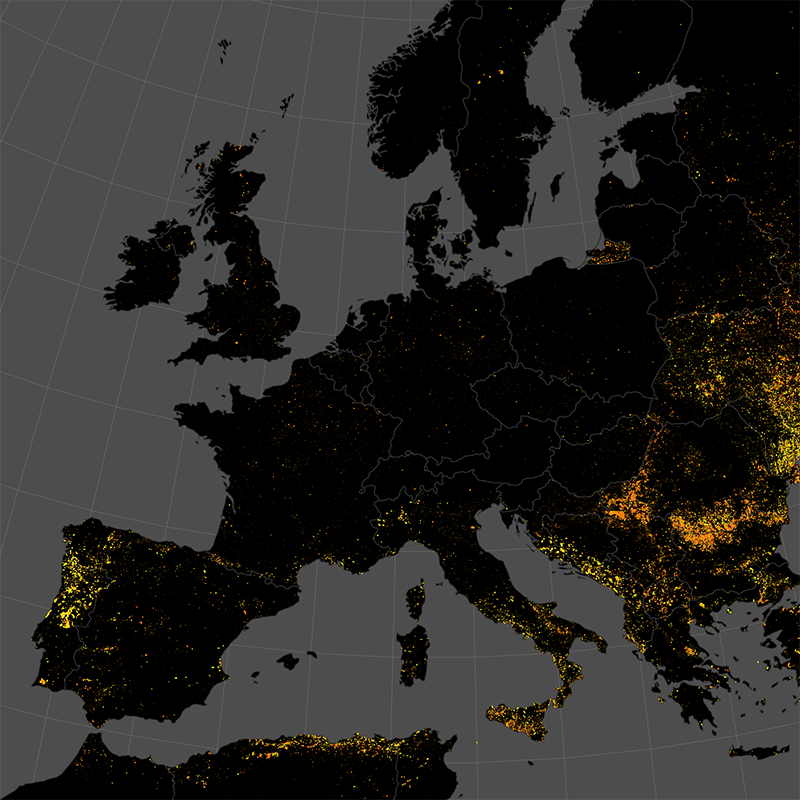
The product is automatically derived from Aqua/Terra (MODIS) satellite imagery in near-real time. It is an incremental product, meaning that the retrieved results are updated as soon as new input data becomes available over a timespan of ten days. Besides the fire perimeter and detection time, each feature contains information about the severity of the burning.
-
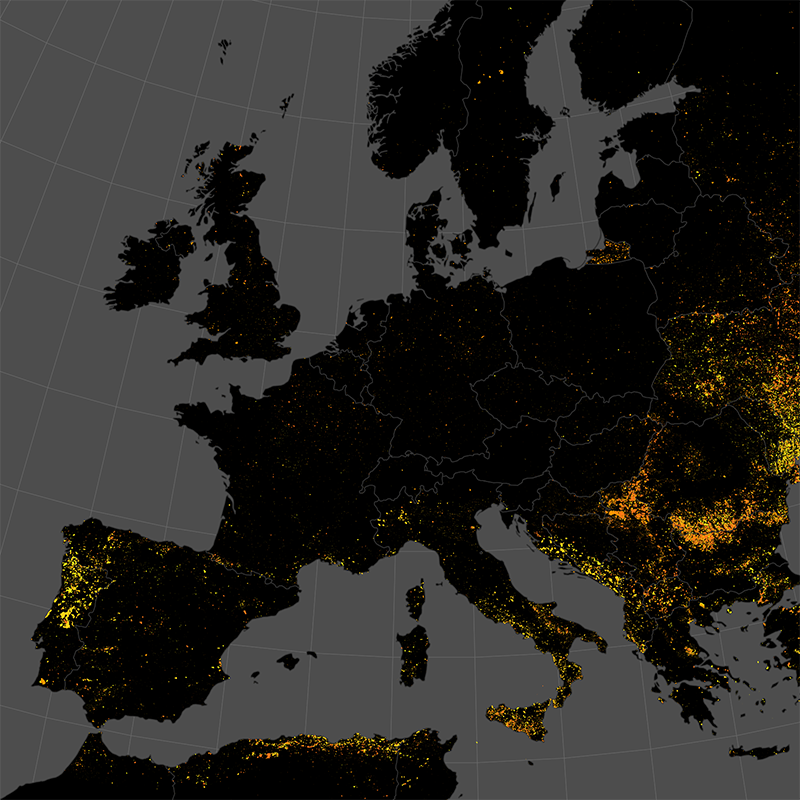
The product is automatically derived from Sentinel-3 (OLCI) satellite imagery in near-real time. It is an incremental product, meaning that the retrieved results are updated as soon as new input data becomes available over a timespan of ten days. Besides the fire perimeter, and detection time each feature contains information about the severity of the burning.
-
Landschaftselemente gelten als Teil der beihilfefähigen Fläche und es kann für sie eine Prämie beantragt werden. Sie müssen eine eindeutige Zuordnung zu einem Feldblock haben. Welche Landschaftselemente förderfähig sind oder nicht und welche Bedingungen diese zu erfüllen haben, ist genau geregelt. Seit 2012 unterliegt jedes beihilfefähiges Landschaftselement den Cross-Compliance-Verpflichtungen (CC). Der aktuelle Datenbestand wird einmal täglich abgerufen.
-
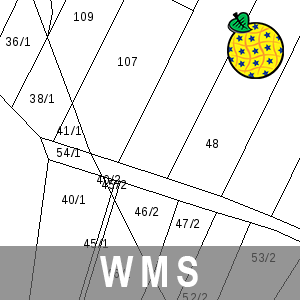
Dieser Dienst stellt für das INSPIRE-Thema Flurstücke/Grundstücke (Katasterparzellen) aus ALKIS umgesetzte Daten bereit.
-
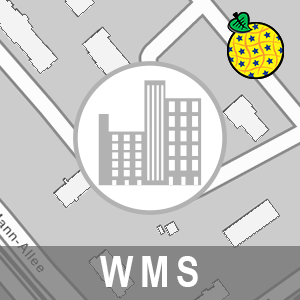
Dieser Dienst stellt für das INSPIRE-Thema Gebäude (Gebäude - 2D) aus ALKIS umgesetzte Daten bereit.
-
Die Stadtwerke Einbeck versorgen neben der Kernstadt Einbeck 46 Ortsteile mit Strom. Die Daten sind nicht einsehbar, sie werden bei berechtigtem Interesse im PDF-Format abgegeben.
-
Dieser Dienst stellt für das INSPIRE-Thema Geografische Bezeichnungen aus ALKIS umgesetzte Daten bereit.
-
Dieser Datensatz stellt für das INSPIRE-Thema Flurstücke/Grundstücke (Katasterparzellen) aus ALKIS umgesetzte Daten bereit.